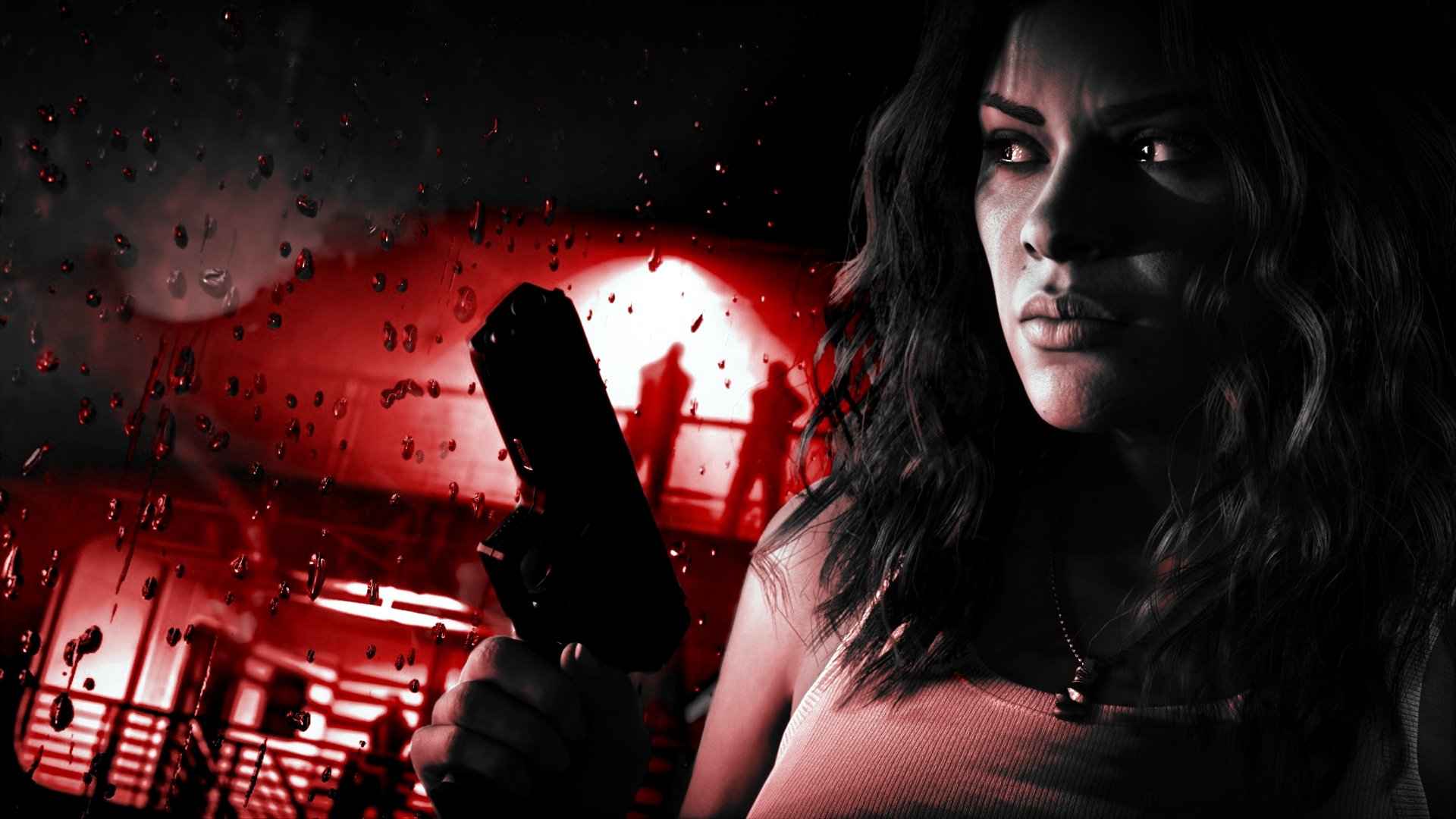

Grand Theft Auto VI broke cover this week. Invited press sat through an extended look at the game and wrote it all down, and the flood of detail covers almost every system in the thing, from police chases to car theft to how much sweat shows up on a character after a sprint.
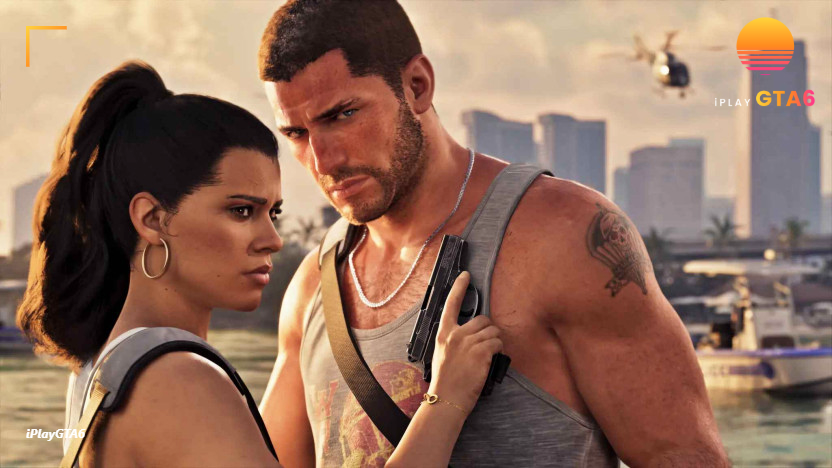
Read past the headline items and a pattern shows up. GTA 6 is less interested in giving you new toys than in making the ones you have cost something. Money has teeth. Your body has stats. The police keep files. Three systems, one philosophy.
Money Is a Gate, Not a Score
In previous games, cash bought property, guns and a nicer car. Here it buys access. Some story missions won't unlock until Jason and Lucia have a set amount in the bank, which means you can't simply mainline the campaign. You have to go out and commit crime between chapters to move the story forward.
And the money is fragile in a way it never was. Cash you're physically carrying vanishes if you get Wasted or Busted. To keep it, you deposit it at an ATM into a joint account the pair share, and no, you can't do it from the phone.
Every Shop Is a Target
Any store in Leonida can be robbed, and the approach is up to you. Go quiet with a lock-picking tool called a Snap Gun. Kill the CCTV first. Or take the backroom keys off a clerk as they run.
Bag choice matters during the job. Carrying several loot bags spreads the haul, and extra bags can sit in a car trunk, but the vehicle's storage sets the hard ceiling on what you can take. Larger bags during prep mean more loot per trip, not infinite loot.
Then comes the oldest decision in crime: speed or greed. Blow a safe with explosives and the payout drops. Take your time chasing the combination and the police get closer. If they surround the perimeter, you're going out the back, and the back way is not always clean.
Jewellery stores, small banks and gang compounds are the high-value options. Bank cash can be marked, which means it needs specialist handling. Stolen jewellery, marked notes, contraband and drugs lifted from gang compounds can't be spent at all. They have to go through fences, who also sell access codes and leads on bigger scores.
Your Body Is a Stat Sheet Now
This is the detail that keeps surprising people. Jason and Lucia's bodies change based on what they eat and how often they train. Overeat and they gain weight, belly included. Put the work in at the gym and muscle and strength follow.
The tracking isn't cosmetic either. Characters carry visible stats for Health, Cardio, Fitness, Stamina, Strength, Calories and Body Fat.
Gyms work like small systems of their own, with changing rooms and vending machines, and a three-exercise circular indicator that tracks a full workout. Building strength takes three consecutive days of training, so no single heroic session shortcuts it.
The exercises are minigames built on rhythm and timing with the triggers, covering squats, pull-ups and the rest. Move too fast or mistime the rep and you burn extra stamina for nothing. Food then becomes a tool: meals and smoothies hand out health boosts or temporary gauge buffs, protein bars improve workout gains, energy drinks top up stamina, and painkillers start giving less back the more you lean on them.
Fast food chains like Burger Shot and Cluckin' Bell run drive-thrus, so you can order without leaving the car, or park and walk in. Thousands of outfits and hairstyles sit behind clothing stores and salons. Trimming and shaving happens at safehouses, but new styles require a salon visit, and unlike Red Dead Redemption 2, hair doesn't grow out on its own. Small stuff counts too: after a fight, you can pick up an NPC's sunglasses and wear them.
Reputation Replaces Honor
The old good-versus-evil honor meter is gone. In its place sits a Criminal Profile, tracked in a character sub-menu rather than a permanent HUD bar, which watches how you commit crime rather than how much. Professional and surgical reads one way. Needless slaughter reads another.
It feeds back into everything: how hostile NPCs are, how hard police come at you, how the story treats you, how the world responds. Shoot out the tyres of a pursuing cruiser to disable it without killing anyone and the profile registers that restraint positively. Push it far enough into indiscriminate violence and the icon in the menu can permanently shatter, locking into a severe state for the rest of the playthrough.
The Police Build a File on You
A wanted level only appears if someone actually sees the crime: a witness, a victim's report, or a security system. That single rule changes how every job starts.
Once police are on you, they assemble a profile. Face and build. The exact outfit. Weapons used. The vehicle you left in. The interface shows icons and text spelling out what they currently know, which doubles as a to-do list for getting away.
Six stars are back, with the first one forgiving and the sixth a full-chaos escape. Police cordon off and search the area where the crime happened, and they keep working it until the heat cools. Cops no longer show up as dots on the minimap during a pursuit, so you have to look with your eyes. Wanted stars render hollow when police know a crime happened but can't identify a suspect, and solid once they know exactly who they're chasing.
The counters are specific. Change clothes to degrade identification. Get a haircut at a salon to invalidate the physical description. Dump the identified gun or abandon the marked car to strip traits from the file. Wear a mask and the CCTV never gets your face. Split up as a couple and the active player's wanted level drops a full star while police divide their attention. Break line of sight, switch to something forgettable, and you can drive straight through a roadblock.
The Relationship Has Rules Too
Romance is optional. Jason and Lucia start with an attraction, and you decide whether it becomes something or stays purely business. It isn't a buff either: the relationship opens narrative and roleplay doors rather than handing out stat bonuses.
A status tracker lives in the character menu. Push it up and you unlock interactions like holding hands on the right trigger or kissing. Ignore messages and it decays. Put the effort in and it recovers.
You can ask your partner to come along for almost anything: exploring, shopping, dates, gym sessions, robberies. Time spent together shapes how story scenes play out, and dates specifically sharpen their coordination during complex robberies. While riding as a passenger in a chase you can bark instructions at whoever's driving. And if one of you goes down during a shared job, both of you are out.
Switching between the two works like GTA 5: any time, in free roam and mid-mission. The small interactions are what sell the pairing. Holding doors for each other, dynamic texts through the day, swapping between driver and passenger seats, and jumping off a height together while still holding hands.
What You Can Actually Carry
The magic weapon wheel is dead. Characters physically carry up to two concealed handguns and two long guns on their back, and that's the arsenal. Everything else waits in a vehicle or a locker.
Weapons aren't lost forever when you drop them. Anything you've bought or found can be pulled back out of an Ammu-Nation locker or your own car, and specific shops stock unique regional guns. Walking around with a rifle out makes people nervous, suspicious, and eventually interesting to the police.
Combat leans harder on restraint than any GTA before it. You can intimidate people into fleeing, shoot a weapon out of someone's hand, or disarm them outright. Suppression fire near a target scares police and civilians into backing off. Shots to the knees or arms incapacitate without killing. Crosshairs tell you which is which: white for a standard hit, yellow for incapacitation, red for a kill.
Aiming swaps shoulders instantly and uses light assist rather than heavy lock-on, and you can switch off the cinematic kill and crash cameras. Focus returns in a Dead Eye-ish form, slowing the world, highlighting points of interest, escape routes and police positions, and marking weak points on vehicles like engines, fuel tanks and tyres. Hand to hand, the two leads fight differently: Lucia can train in kickboxing and MMA, Jason brawls.
A World That Answers Back
Rockstar built more than 600,000 animations for NPCs this time. GTA 5 had 55,000. Pedestrians are individually art-directed rather than purely randomised, with distinct heights, body shapes and ages, mobility scooters included.
You get Greet, Taunt, Defuse and Provoke in conversation, and people react to being stared at, followed, or crowded. They eavesdrop, and they notice when you're eavesdropping. Some carry concealed weapons and will use them if you try to take their car.
They comment on your outfit based on tags, so dressing provocatively gets a response. Random events fire without scripting: a stranger daring you to jump off a bridge, or a handcuffed woman kicking out a police car window while a taser misfire turns into a crowd escape. Ask before petting someone's dog and the owner and animal will react warmly, defensively, or aggressively.
Social media is interactive. Watch a livestream and the event is happening somewhere real, so you can travel to the broadcast location and find the streamer standing there.
The Map, the Chapters and the Choices
Rockstar originally considered four playable leads before settling on two, to protect the emotional weight of the story. Both come with real backstory, and Lucia's ankle monitor matters to the plot and to how she and Jason end up together.
The premise is fugitives trying to disappear into Vice City and raise enough to get out after a simple job goes badly wrong. It's set in the present day, phones and social media included. The campaign runs about as long as Red Dead Redemption 2; head of development Rob Nelson finished an 80-hour playthrough in February, optional content included.
Structurally it's split into chapters, and the world opens up considerably once the opening missions are done. You start in the Leonida Keys in the south, near Jason's house. Decisions, major and minor, bend the playthrough, and missions are deliberately less restrictive than GTA 5 and Red Dead Redemption 2, with more room to choose your approach. The themes aren't subtle: hope, sacrifice, selfishness, and whether this relationship survives.
Scale, in Numbers
The map is roughly three times the playable area of Red Dead Redemption 2. Vice City alone is twice the size of GTA 5's Los Santos, and once satellite towns are counted, Leonida holds about 11 times the urbanised land of GTA 5. Roads are around 15 percent narrower on purpose, so the city feels denser and bigger than it measures.
Interiors are everywhere, and anywhere a story mission takes you stays open afterwards. There's a large military base near the far end of the Keys, a fully explorable zoo, pawn shops acting as fences, and hotels you can walk through from lobby to roof. Safehouses can't be bought, only unlocked as the story moves the pair between living situations, while garages are purchasable across Leonida to expand storage.
The pause map uses satellite imagery instead of a street diagram, unexplored areas sit under fog, and the world holds its detail from rooftop to pavement without vehicles swapping models mid-fall. Sand sticks to shoes. Sweat shows after a sprint. Water plants move, reflections are real-time, puddles form, bullet holes and scratches persist, and injuries stay on the body.
Fast travel comes through the RydeMe rideshare app, buses and a working rail service, and you can hide the entire HUD if you want. Quick navigation lets you set a destination without opening the map at all. You can also fiddle with empty cans, read magazines on the shelf, open doors, use bins, and steer a full mid-air rotation after jumping into water for flips, dives and head-first plunges.
Vehicles, Fuel and the Fence Economy
Hundreds of vehicles are in, from supercars to boats, kayaks, electric scooters and off-roaders. Handling is heavier than GTA 5, and an overturned car stays overturned; you can't rock it back upright by steering. Traffic thickens with rush hour.
Cars and bikes run on fuel, with a gauge that can strand you mid-chase, though the tank lasts long enough that it isn't busywork. Electric vehicles charge at stations. A dedicated interaction menu handles trunks, hoods and individual doors.
Parked cars come in security tiers. Old ones surrender to a slim jim or a smashed window. Modern high-end models need key cloners or phone-hacking tools, and some are simply locked until the story hands you the gear. The WAINK phone scanner checks locks, market value, alarms, tracker status and registration cost before you commit. Cars with occupants can be jacked the old way, with a quick-time event as the passengers fight back.
Each character can own several personal vehicles, kept at safehouses, while stolen cars stay temporary until registered and eventually despawn. The starting garage limit is three, expanded by buying garages. Selling to a fence pays less if you damaged the car on the way. High-end trackers call the police if you drive too slowly, and they have to come off at a fence before you can register or sell. Personal cars can be delivered by a driver who turns up on an electric scooter, and if police find an abandoned one it gets impounded, leaving you to sneak it back or pay.
Trunks double as mobile armouries for guns, gear and outfit changes. Pay & Spray returns for resprays that break a chase, repairs, valuations and registrations, and mod shops across Leonida each specialise in different work, nitrous included.
Activities and the Technical Bits
Side content runs deep: pool, mini golf, kayaking, zoo visits, scuba diving, parachuting, off-road racing, monster truck racing, gym workouts, hunting, fishing, and underwater treasure hunting around shipwrecks. Full tennis matches, surfing and skateboarding didn't make the cut, cut for quality reasons rather than time.
Wildlife can be studied and ticked off a checklist at the zoo or in the wild, the way Red Dead Redemption 2 handled species. Dogs can be petted, scolded, or fed treats bought at convenience stores.
The phone zooms into the character's hands instead of sitting on the HUD, and it's loaded: social media, messaging, fitness tracking, video apps, banking, health. Scooter Bros is the app that delivers your personal vehicle. Snapmatic browsing surfaces posts, videos and livestreams that can point you toward random events or hideouts. Jason and Lucia can't post pictures of themselves, since fugitives with a public feed don't stay fugitives.
Satire stays deliberately timeless, avoiding hyper-specific political memes, COVID-19 references and recent presidents. Technically the game runs at 1440p targeting 30 FPS on PS5 and Xbox Series X|S, with nothing announced about PS5 Pro enhancements, and the DualSense gets haptic feedback and adaptive trigger resistance for driving and minigames. There's no first-person mode outside aiming certain weapons, an extensive accessibility suite, a Photo Mode but no full Rockstar Editor at launch, on-demand podcasts on the radio, and a copyright-free music toggle aimed at creators.
Put together, the pitch is clear. Rockstar isn't just selling a bigger Leonida. It's selling a version of GTA where the bank balance, the body and the rap sheet are all connected, and where the sloppy option is genuinely worse. The map is roughly three times the playable area of Red Dead Redemption 2, and the game lands November 19, 2026 on PS5 and Xbox Series X|S. Whether the friction feels like freedom or just friction is the question launch finally answers.
Quick Questions
Do GTA 6 missions really require money to unlock?
Some do. Certain story missions need a set amount of funds before they become available, which pushes players into open-world crime between chapters.
Can Jason and Lucia's bodies change?
Yes. Eating and exercise alter their appearance and their tracked stats, which include Health, Cardio, Fitness, Stamina, Strength, Calories and Body Fat.
What is the Criminal Profile?
A replacement for the honor system that tracks how professionally or violently you commit crimes. It affects NPC hostility, police response and the story, and can permanently shatter at the extremes.
Do police still chase you without witnesses?
No. A wanted level only appears if an NPC sees the crime, a victim reports it, or a security system detects it.